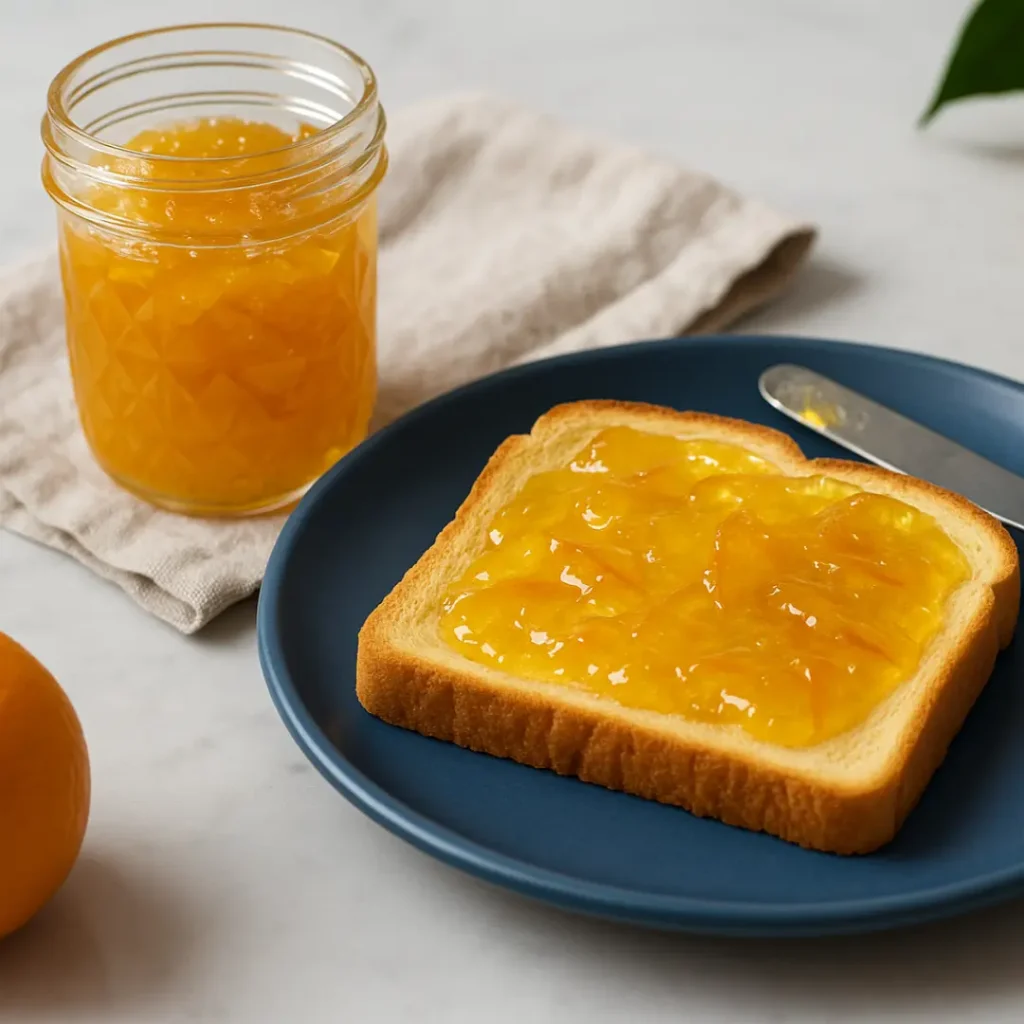
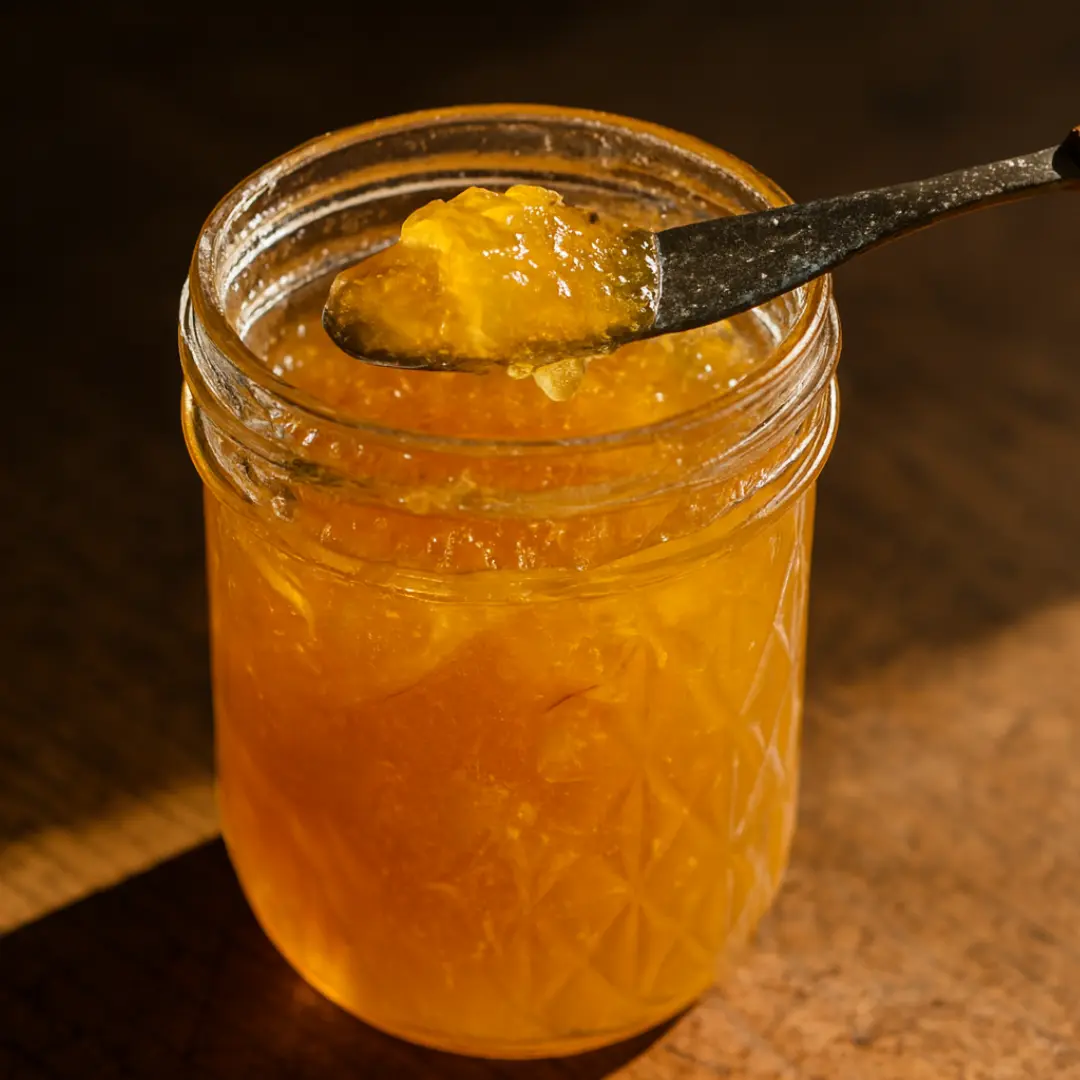
If you enjoy the taste of fresh oranges, this orange marmalade inspired by Alton Brown is very easy to make at home. This Alton Brown orange marmalade recipe brings together oranges and a little lemon to create a sweet and slightly tangy spread. The fruit is prepared in a clear and easy way, and the final marmalade has a strong and bright orange flavor.
In this Alton Brown orange marmalade recipe, I shall tell you step by step how to make this flavorful marmalade along with its flavorful variations and helpful tips. It tastes very good on toast, muffins, or any warm bread.
Key Takeaways
- Bright and Real Flavor: The marmalade has whole oranges and a little lemon. These ingredients create a sweet and tangy taste. The zest adds a fresh orange flavor.
- Sweet and Lightly Bitter Balance: The marmalade tastes sweet with a light hint of bitterness from the orange peel. This mix creates a pleasant and full flavor.
- Good Amount in One Batch: One batch gives about ten half pint jars. This amount works well for your home or for sharing with friends and family.
- Good Shelf Life: Keep sealed jars in a cool and dry place for up to six months. After opening a jar, place it in the refrigerator and finish it within a few weeks. If you do not can the marmalade, store it in the refrigerator from the start and follow the same time frame.
What Is Alton Brown’s Orange Marmalade?
Alton Brown’s orange marmalade is a simple homemade spread made from oranges, lemon, water, and sugar. The whole fruit is sliced thin, including the peel, so the marmalade has a strong and fresh orange taste. The natural pectin in the peel helps the mixture thicken during cooking, so you do not need store bought pectin. The lemon adds a light tart taste and helps the marmalade set. The final result is a bright orange spread with soft pieces of peel in every spoonful.
What Makes This Marmalade Different?
This marmalade is simple to make and you do not need any special ingredients to make it. In this Alton Brown orange marmalade recipe, the thin slices of fruit soften quickly, so the cooking time is not long. You can use one kind of orange or mix a few kinds for a richer flavor.
Why This Orange Marmalade Has Bright Flavor
The bright flavor comes from the whole fruit. The thin slices give the spread a fresh orange taste from both the peel and the inside of the fruit. The lemon adds a light touch of acidity that keeps the flavor lively. The mix of sweetness and gentle bitterness creates a clean citrus taste in every spoonful.
Why I Love This Alton Brown Orange Marmalade
Fresh Orange Flavor in Every Bite
I enjoy this marmalade because each spoonful tastes like real oranges. The recipe uses the whole fruit, so the flavor stays bright and natural. When I spread it on warm toast, the citrus smell rises right away, and it feels fresh and comforting. The thin pieces of peel add a light chew and a stronger orange taste. Many store bought marmalades taste mostly sweet or dull, but this one tastes lively and full of real fruit flavor. The lemon adds a light tart taste that keeps the marmalade from tasting flat. Each spoonful feels warm, sunny, and full of fresh orange character.
Perfect Balance of Sweet and Bitter Orange Taste
I also like this marmalade because the flavor stays balanced. Good marmalade should have a little bitterness from the peel, and this recipe keeps that balance steady. The sweetness comes first, and then a soft bitter note follows to keep the taste from becoming too sugary. This mix gives the marmalade depth and a more interesting flavor. It does not taste heavy or overly sweet. It tastes clean and smooth, with just enough bitterness to remind you that it is real marmalade.
Variations of Alton Brown Orange Marmalade
Mixed Citrus Alton Brown Marmalade
You can make a mixed citrus version if you want a deeper and more interesting flavor. Replace some of the oranges with other citrus fruits. Pink grapefruit adds a stronger and slightly bitter taste. Blood oranges add a deeper color and a light berry note. A little lime adds extra tartness. Keep the total amount of fruit the same as the original recipe. If you use fruits with thick peels, such as grapefruit, slice them very thin so they soften well. This variation gives you a spread with sweet, sour, and lightly bitter flavors all in one jar.
Ginger Infused Marmalade Version
For a warm and spicy taste, add fresh ginger. Peel a small piece of ginger and slice it very thin. Add the ginger slices to the pot at the start of cooking. As the marmalade cooks, the ginger gives a light heat and a soft spice flavor. The taste stays gentle and does not overpower the orange. You can also add a little chopped candied ginger near the end of cooking if you want small sweet and spicy bits in the spread. This version feels warm and comforting, especially during colder months.
Low Sugar Orange Marmalade Option
You can make a lower sugar version if you want a less sweet spread. Reducing the sugar will make the marmalade softer and a little more bitter. The texture may be runnier because sugar helps the marmalade set. To improve the set, you can add a low sugar pectin. You can also replace part of the sugar with a sweetener such as stevia or Splenda, or use a little honey. A low sugar version does not last as long. Store it in the refrigerator and use it within two or three weeks. You can also freeze small portions. This option lets the citrus tartness stand out more while keeping the sweetness light.
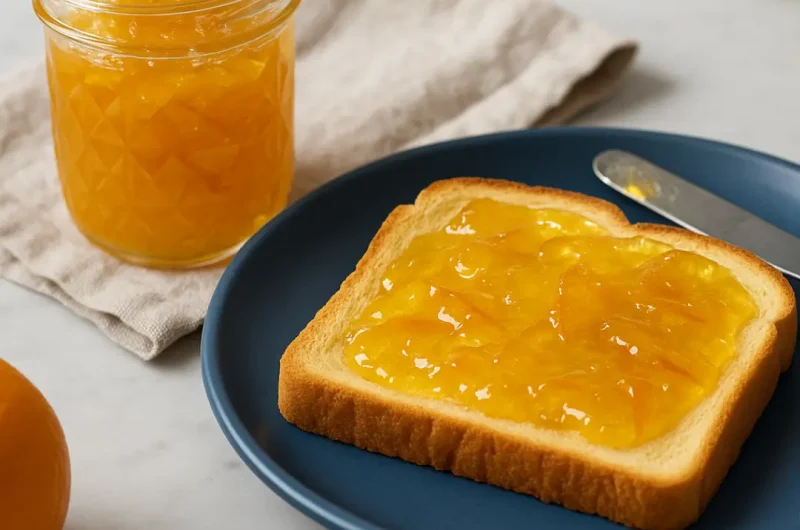
Recipe for Alton Brown Orange Marmalade
Course: DessertCuisine: AmericanDifficulty: Easy80
servings20
minutes1
hour50
kcalTry this easy Alton Brown orange marmalade recipe made with fresh oranges. A sweet homemade spread for toast and morning meals.
Ingredients for Alton Brown Orange Marmalade Recipe
1.75 pounds oranges
1 large lemon
6 cups water
3.75 pounds granulated sugar
Step by Step Instructions for Orange Marmalade
- Preparing Oranges the Right Way: Wash the oranges and the lemon well because you will use the peels. Dry them with a clean towel. Cut off the hard ends of the oranges. Slice the oranges very thin, about one eighth of an inch thick. Remove any seeds as you slice. Grate the lemon zest and keep it aside. Cut the lemon in half and squeeze out the juice. Remove any seeds from the juice. Cut the orange slices into quarters so the pieces spread well through the marmalade.
- Combine with Water and Simmer: Place the sliced oranges, the lemon zest, and the lemon juice into a large pot. Add the six cups of water. Stir gently. Turn the heat to high until the mixture boils. Reduce the heat and let it simmer for about forty minutes. Stir sometimes so nothing sticks. The peel will soften, and the mixture will look a little thicker by the end.
- Cooking and Thickening the Marmalade: Keep the pot on medium heat. Add the sugar in small portions and stir after each addition until it melts. When all the sugar melts, turn the heat higher until the mixture boils again. Stir often while it boils for fifteen to twenty minutes. The color will turn darker, and the mixture will look thicker.
- Testing for the Perfect Set: Place a small plate in the freezer for a few minutes. Put a small spoonful of hot marmalade on the cold plate. Wait thirty seconds, then tilt the plate. If the marmalade moves slowly like a soft gel, it is ready. If it runs quickly, cook it for a few more minutes and test again.
- Filling the Jars: Turn off the heat. Use a ladle to fill clean jars with the hot marmalade. Leave a small space at the top. Wipe the rims clean and place the lids on. Let the jars cool on the counter. Store the jars in the refrigerator if you plan to eat the marmalade within a few weeks. If you want long storage, use standard canning steps to seal the jars.
Nutrition Facts
80 servings per container
- Amount Per ServingCalories50
- % Daily Value *
- Total Fat 0g 0%
- Saturated Fat 0g 0%
- Trans Fat 0g
- Cholesterol 0mg 0%
- Sodium 0.002mg 1%
- Total Carbohydrate 13.4g 5%
- Dietary Fiber 0.1g 1%
- Total Sugars 12.6g
- Protein 0.1g 1%
- Potassium 0.022mg 1%
* The % Daily Value tells you how much a nutrient in a serving of food contributes to a daily diet. 2,000 calories a day is used for general nutrition advice.
More Recipes You’ll Love
Also check out the delicious recipe of Trisha Yearwood Crack .
Equipment Needed for Homemade Marmalade
- Large Pot: Use a large heavy pot made of stainless steel or enamel. It should hold at least eight quarts so the fruit can cook safely.
- Cutting Tools: A mandoline helps you slice the oranges thin. A sharp knife works fine if you do not have one. You also need a cutting board and a small zester for the lemon zest.
- Candy Thermometer (Optional): A thermometer helps you check the cooking point. It shows when the marmalade reaches the right temperature for setting.
- Stirring Spoon: Use a long wooden spoon or a heat safe spatula to stir the hot mixture.
- Canning Jars: Use clean eight ounce jars if you want to store the marmalade for a long time. Mason jars with new lids work well.
- Canning Tools (Optional): A wide jar funnel helps you fill jars without spills. A jar lifter or heat safe tongs help you handle hot jars. A ladle is useful for scooping the hot marmalade.
- Large Pot for Water Bath: Use a deep pot if you plan to seal the jars. It must be tall enough to cover the jars with boiling water.
- Small Freezer Plate: Place a small plate in the freezer. You will use it to test the texture of the marmalade.
- Clean Towels: Use one towel to place hot jars on and one damp towel to wipe the jar rims.
Tips for Perfect Alton Brown Orange Marmalade
Use Fresh Thin Skinned Oranges
Fresh oranges give the best taste. Choose oranges that feel heavy for their size and do not have soft spots. Thin skinned oranges work well because they have less white pith, which means less bitterness and faster cooking.
Varieties like Valencia, Cara Cara, mandarins, or tangerines give a sweet and bright flavor. If your oranges have thick peels, remove some of the extra white pith to reduce bitterness. Wash the fruit well, especially if it has a wax coating. Fresh fruit also gives better pectin, which helps the marmalade set.
How to Control Sweetness and Bitterness
You can adjust the sweetness if you prefer a lighter taste. Reducing the sugar makes the marmalade more tart and gives a softer set. A low sugar batch should be stored in the refrigerator and enjoyed soon. You can also mix in a little honey or use part brown sugar for a richer flavor.
To manage bitterness, you can blanch the sliced oranges in boiling water for a minute or two, then drain them. This softens the peel and removes some bitterness. A tiny pinch of salt can also balance the flavor. If you want a sweeter taste, add one sweeter citrus fruit such as a tangerine. Remember that a small hint of bitterness is part of classic marmalade.
Common Mistakes to Avoid
- Skipping the set test: Always test the marmalade before turning off the heat. Use a thermometer or the freezer plate test to avoid a runny or too firm texture.
- Not sterilizing jars: If you plan to keep jars at room temperature, make sure they are sterilized and sealed properly. If you skip the canning step, store the jars in the refrigerator and use them soon.
- Cooking on very high heat: High heat without stirring can burn the sugar. Burned marmalade tastes bitter and cannot be fixed, so keep the heat steady and stir often.
- Overcooking: Cooking for too long can make the marmalade hard and overly dark. Once it reaches the right texture, turn off the heat. It will thicken more as it cools.
- Overfilling jars: Leave a small space at the top of each jar. Filling jars to the top can prevent a proper seal.
- Tightening lids too much: Close the lids until snug but not overly tight. They need a little room for air to escape during sealing.
- Not checking the seal: After cooling, press the center of each lid. If the lid moves up and down, store that jar in the refrigerator and use it soon.
Storage and Shelf Life for Orange Marmalade
Homemade orange marmalade can last a long time when stored the right way. Here are the best methods for short term and long term storage.
Storing Orange Marmalade in the Refrigerator
If you do not can the marmalade, or if you have opened a sealed jar, keep it in the refrigerator. Let the marmalade cool to room temperature first. Place it in a clean jar or container with a tight lid. In the refrigerator, the marmalade stays fresh for about two to four weeks after opening. The marmalade tastes its best during the first month.
Always use a clean spoon when taking marmalade from the jar. This helps prevent mold. If you notice mold, bubbles, or a sour smell, throw the jar away.
You can also freeze marmalade. Place it in freezer safe containers, leave some space at the top, and freeze for up to six months. Thaw it in the refrigerator before using. This is helpful when you want to store small batches for later.
How to Can Marmalade for Long Term Storage
The water bath canning method helps you keep marmalade on the shelf for months. Here is a simple overview.
Sterilize Jars and Lids
Place the jars and bands in a large pot of water. Boil them for ten minutes. Warm the flat lids in hot water so they stay clean. Keep the jars hot until you fill them.
Fill the Jars
Ladle the hot marmalade into the hot jars. Leave about one quarter inch of space at the top. Wipe the rims clean. Place the lids on the jars and screw the bands on until snug.
Process in a Boiling Water Bath
Place the filled jars in a deep pot of boiling water. The water should cover the jars by at least one inch. Use a rack or a folded towel at the bottom of the pot. When the water returns to a full boil, boil the jars for ten minutes. This step helps seal the jars and keeps the marmalade safe.
Cool and Check the Seals
Lift the jars out carefully and place them on a towel. Let them cool for twelve to twenty four hours without touching the lids. As they cool, the lids will pull inward and seal. When the jars are cool, press the center of each lid. If the lid does not move, the jar is sealed. Any jar that did not seal should go in the refrigerator and be used soon.
What to Serve With Alton Brown Orange Marmalade
Toast and Breakfast Ideas
- Classic Toast Spread: Warm toast with butter and orange marmalade is the easiest and most comforting way to enjoy it. The butter melts under the sweet citrus flavor, and each bite tastes rich and bright. You can also spread marmalade on English muffins, baguette slices, bagels, or croissants.
- Pancakes or Waffles: Spoon or drizzle a little marmalade over pancakes, waffles, or French toast. The orange flavor adds a fresh twist. Warm the marmalade for a few seconds if you want it thinner and easier to pour.
- Yogurt or Oatmeal: Mix a spoonful of marmalade into plain yogurt for quick fruit flavor. You can also add a little marmalade on top of oatmeal or overnight oats. It adds sweetness, color, and a bright citrus taste.
- Breakfast Pastries: Spread marmalade inside crepes, pastries, or danishes. It also tastes great with scones and a little cream. The citrus flavor balances the richness of baked treats.
Cheese Board and Dessert Pairings
- Cheese Board Companion: Marmalade pairs nicely with cheese. It tastes great with sharp cheddar, creamy brie, Camembert, or goat cheese. Spread a little marmalade on a cracker with your cheese for a sweet and savory bite. You can also bake a small wheel of brie with marmalade on top for an easy appetizer.
- Glaze for Meats: Marmalade makes a simple glaze for ham, chicken, or pork. Mix it with a little mustard or soy sauce and brush it on meat during the last part of cooking. It adds a sweet citrus shine and a warm flavor.
- Dessert Topping: Use marmalade as a topping or filling for desserts. Warm it and brush it over fruit tarts, swirl it into cheesecake batter, or spread it between cake layers. You can also spoon it over vanilla ice cream or pound cake. The light bitterness and sweet orange taste add a bright finish to creamy and rich desserts.
Nutrition Information for Orange Marmalade
Calories per Tablespoon
One tablespoon of this orange marmalade has about 50 calories. The calories come mostly from carbohydrates because the spread is high in sugar. There is almost no fat and very little protein in it.
Sugar and Vitamin C Content
One tablespoon of this marmalade has about twelve to thirteen grams of sugar. This is roughly three teaspoons of sugar in one serving. The sugar helps the marmalade stay fresh and gives it a sweet taste, but it also means you should enjoy it in moderation, especially if you are watching your sugar intake.
The marmalade has a little vitamin C because it comes from real oranges and lemon. Cooking reduces vitamin C, so only a small amount remains in the final spread. You also get a tiny amount of fiber from the peel, but the amount is very small. The main role of marmalade is to give sweetness and energy, not vitamins.
Orange marmalade does not contain fat or cholesterol, and it is made from simple ingredients. If you want a lighter option, use a small amount on whole grain toast or pair it with yogurt or cheese to balance the sweetness. Enjoy it as a small treat that adds bright citrus flavor to your breakfast.
FAQs
Can I Use Other Citrus Fruits?
Yes, you can use other citrus fruits. Grapefruit, tangerines, mandarins, blood oranges, or even a little lime work well. Mixing different citrus fruits can give the marmalade a deeper and more interesting flavor.
How Long Does Homemade Marmalade Last?
If you keep sealed jars in a cool and dry place, they stay fresh for several months. After opening a jar, store it in the refrigerator and finish it within two to four weeks.
Why Did My Marmalade Not Set?
The marmalade may not set if it did not cook long enough, if the fruit did not release enough pectin, or if the mixture did not reach the right temperature. You can cook it a few minutes longer and test the texture again with the cold plate test.
Can I Reduce the Sugar?
Yes, you can reduce the sugar, but the marmalade will be softer and more tart. It will also spoil faster. A low sugar batch should be stored in the refrigerator and used within a few weeks.
What Is the Best Way to Sterilize Jars?
Place clean jars and bands in a large pot of water and boil them for about ten minutes. Keep the jars hot until you fill them. Warm the lids in hot water so they stay clean and ready for sealing.
If you liked this recipe, try our

I’m a sweet chef who loves creating irresistible cakes, pastries, and sweet treats. When I’m not baking, you’ll find me experimenting with new flavors, enjoying a good cup of coffee, and sharing my passion for desserts with the world.